

Isabella Blow Was Never Just the Woman in the Hat
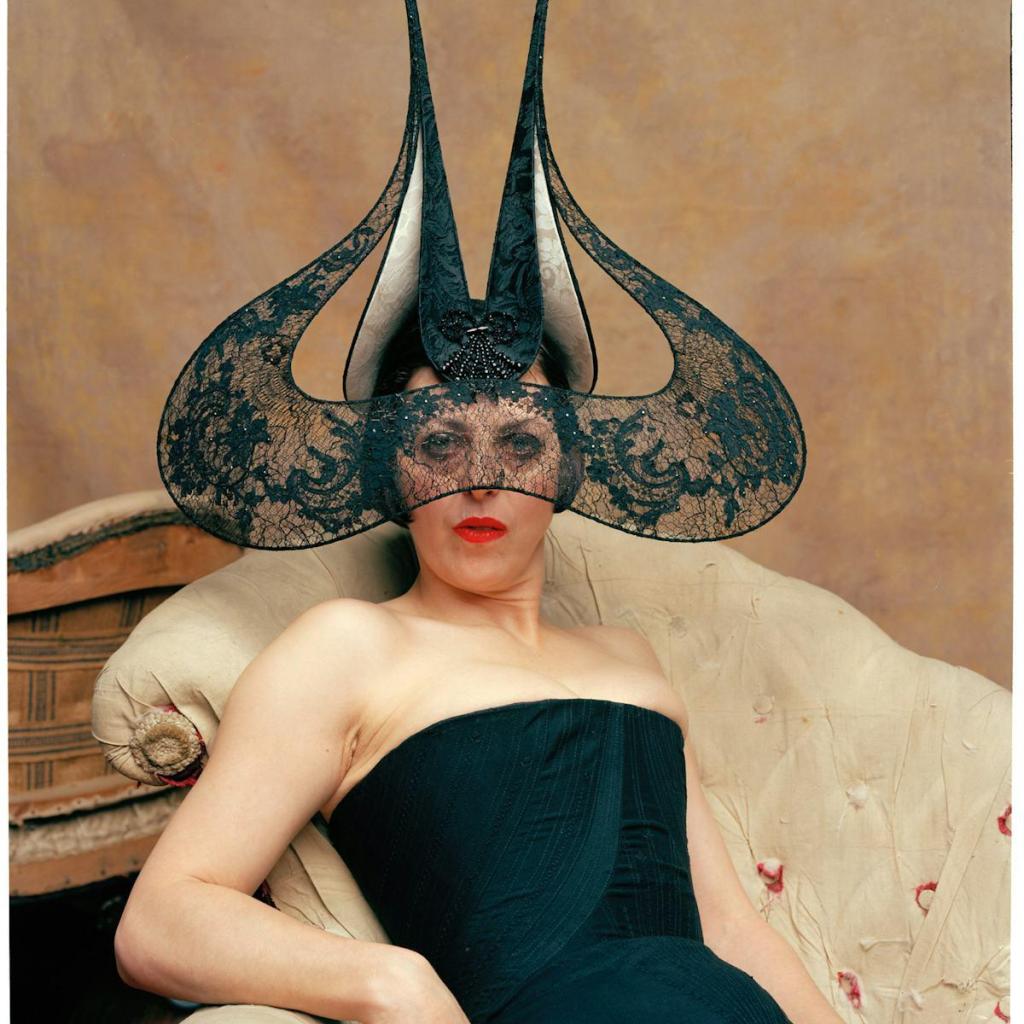
Image courtesy of WMagazine
She helped discover Alexander McQueen, championed Philip Treacy and made dressing an act of imagination. But behind Isabella Blow’s extraordinary appearance was one of fashion’s most perceptive eyes — and one of its most complicated stories.
There are fashion people who follow the conversation, and then there are those who change what the conversation is about. Isabella Blow, the British fashion editor whose extraordinary hats became almost inseparable from her identity, belonged firmly to the latter category. Long before theatrical dressing became familiar currency on red carpets and social media, Blow understood something fundamental about fashion: a look could be more than beautiful. It could be a character, a provocation, an entire world.
Today, her image is instantly recognisable. The sculptural headpieces by Philip Treacy, the vivid lipstick, the dramatic silhouettes, the clothes by Alexander McQueen. Yet to remember Blow only as the woman in the hat is to miss her real contribution. She was not simply a muse who wore remarkable clothes. She was an editor, a talent scout and a creative force who recognised possibilities in other people before the industry knew what to do with them.
And that is what makes her story worth revisiting.

Image courtesy of LeMonde
The eye that saw Alexander McQueen
In 1992, Blow attended the MA graduate fashion show at Central Saint Martins in London. Among the collections was the work of a young Alexander McQueen, whose graduate collection, Jack the Ripper Stalks His Victims, would become an important early chapter in British fashion history.
Blow recognised something in it. She bought the entire collection, reportedly for £5,000, and became one of McQueen’s earliest and most consequential champions. Her support went beyond admiration: she helped bring his work to the attention of people who could open doors, giving an emerging designer the visibility and backing that raw talent alone does not always secure.
It was an extraordinary act of conviction. McQueen’s work was technically accomplished, emotionally charged and often unsettling. It did not offer the easy reassurance of conventional prettiness. Blow understood that its power lay precisely in its refusal to behave.
Her instinct extended beyond McQueen. She championed milliner Philip Treacy, whose sculptural creations became a defining part of her personal style, and supported talents including Hussein Chalayan and models Sophie Dahl and Stella Tennant. Her influence on the fashion of the 1990s was therefore not confined to what she wore. It extended to the people whose work she helped the world see.
As The Guardian explored in its account of Blow’s legacy, her importance as a discoverer and supporter of creative talent deserves at least as much attention as her spectacular appearance.
The distinction matters. A muse inspires an image. A perceptive editor can help make an entire career possible.
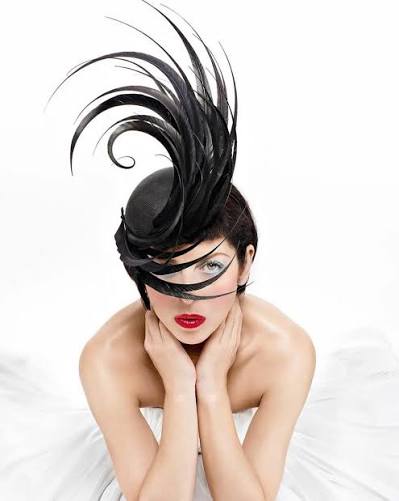
Image courtesy of Vogue
A hat was never just a hat
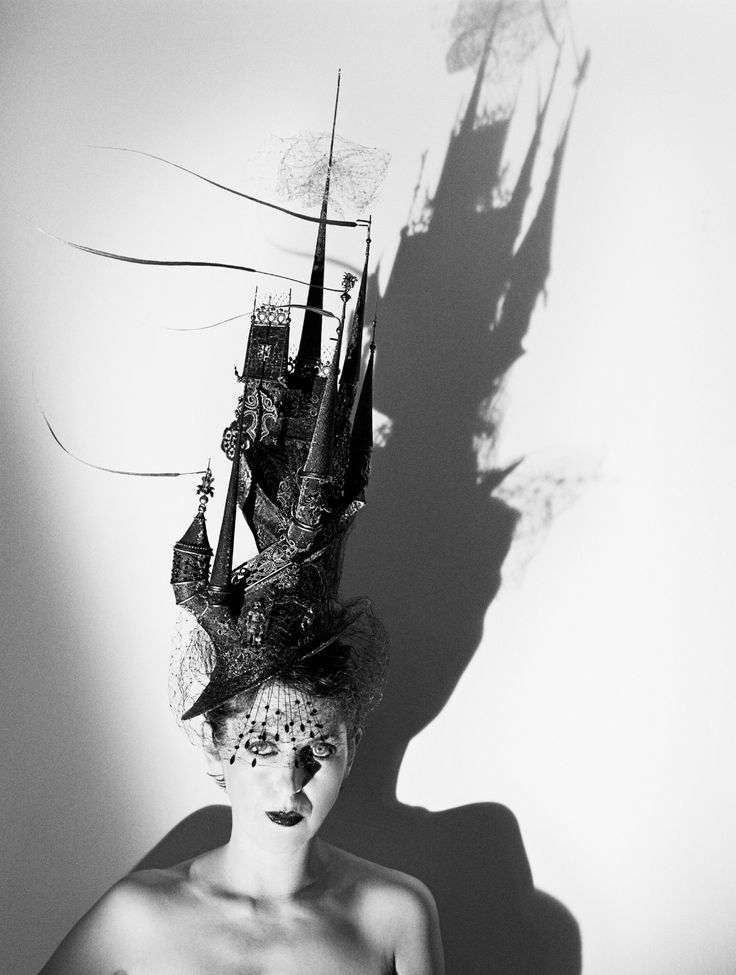
Blow’s relationship with Treacy produced some of fashion’s most memorable collaborations. Their shared imagination seemed to operate outside the usual rules of proportion, practicality and restraint. Hats became ships, architectural structures and surrealist objects. They framed her face, altered her silhouette and made even the simplest outfit impossible to overlook.
But to call these creations eccentric accessories is to underestimate what they achieved.
Blow understood the power of a recognisable visual identity long before personal branding became a profession. Her hats were not interchangeable finishing touches. They were part of a coherent visual language, one that made her instantly identifiable in a room, in a photograph or across a crowded fashion show.
There was also something more intimate about them. Blow spoke of hats as part of herself, and they could offer a form of emotional protection. The image projected outward was bold, sometimes intimidating; the person behind it was considerably more complicated. In a British Vogue biography, Blow’s own words reveal that the theatrical exterior was not the whole story.
This is where her style becomes particularly interesting. Fashion is often discussed as a means of attracting attention, but it can also create distance, establish boundaries and allow someone to construct a version of themselves they feel able to inhabit.
Blow did not dress to disappear into the room. But neither should we assume that someone who dresses to be seen has nothing to hide.
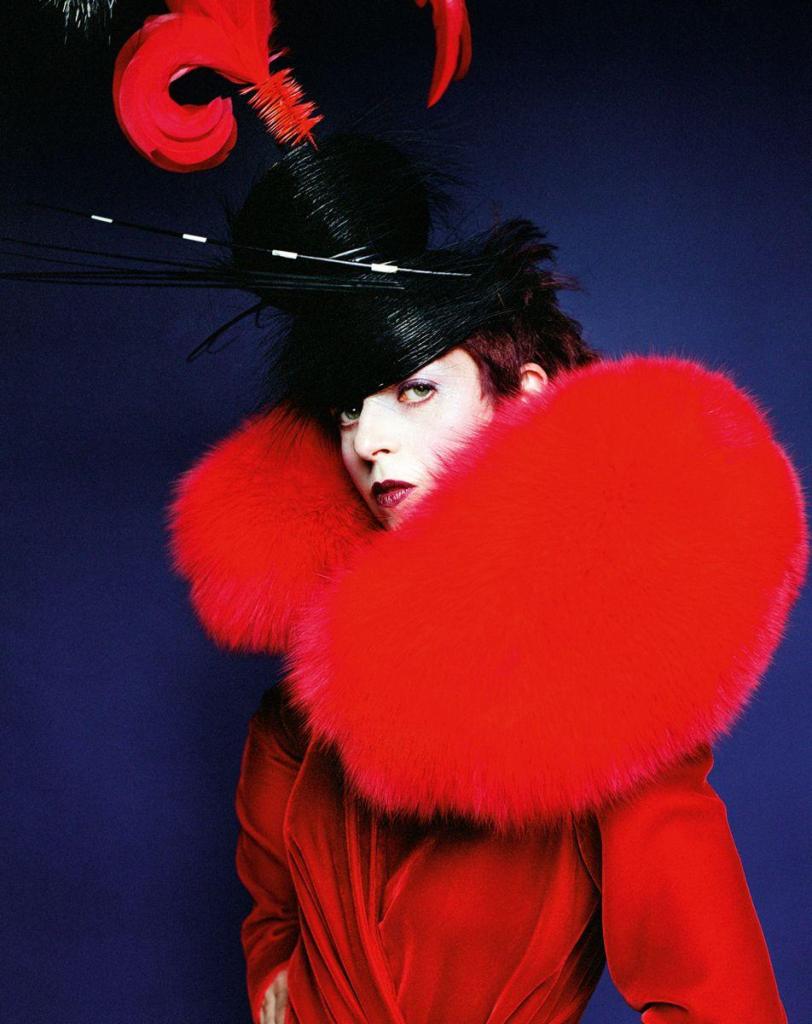
Image courtesy of Vogue
The woman who helped create the image
There is an uncomfortable irony in Blow’s place in fashion history. She possessed an extraordinary ability to recognise and promote talent, yet her own professional and personal life was marked by difficulties that public photographs could never fully convey.
Her relationship with McQueen, in particular, became part of a more complicated legacy. She had helped propel his career, but the commercial realities of fashion, questions of money and the changing relationships between designers and those who champion them contributed to her feeling increasingly marginalised. The story cannot be reduced to a simple tale of betrayal, but it does expose an uncomfortable truth about the industry: the person who recognises talent is not necessarily the person who benefits most from its success.
Blow also lived with depression and experienced profound personal distress. She died in 2007, aged 48. Her life should not be romanticised as a tragic price paid for creativity, nor should her suffering be treated as an explanation for every aspect of her style.
What remains striking is the distance between the public image — the hats, the drama, the seemingly inexhaustible appetite for fashion — and the private difficulties that accompanied it. The photographs preserve the spectacle. They cannot tell us everything about the person who stood beneath it.
That distinction is important whenever we revisit a figure whose life has become fashion mythology. An extraordinary wardrobe is not a complete biography.
Courtesy of Vogue
Why Isabella Blow still matters
Fashion has never lacked for beautiful clothes or people capable of wearing them. What is rarer is the ability to recognise a new visual language before it becomes familiar, and to support the people brave enough to speak it.
Blow had that ability. She understood that fashion needed risk, imagination and people willing to look unusual before unusual became desirable. Her legacy lives not only in the hats preserved in collections or the photographs that continue to circulate, but in the careers she helped advance and the possibilities she helped make visible.
There is a reason her image feels particularly at home in late October. The drama, the theatricality, the surreal silhouettes and the sense of a character emerging from beneath a hat all seem to belong to a world in which clothing can transform its wearer into something unexpected.
But Blow was not dressing for Halloween. She was practising a more serious form of imaginative freedom: treating the body as a canvas, style as a language and fashion as a place where the improbable could become real
Perhaps that is the most enduring lesson of Isabella Blow. Not that we should all dress more extravagantly, or that a memorable hat can turn anyone into a fashion icon. It is that a genuinely original eye sees beyond what already exists. It recognises potential where others see an outsider, and possibility where others see something too strange to sell.
The hat may be what we remember first.
The vision is what we should remember longest.