

Roger Vivier: The Parisian Art of Making a Shoe Extraordinary
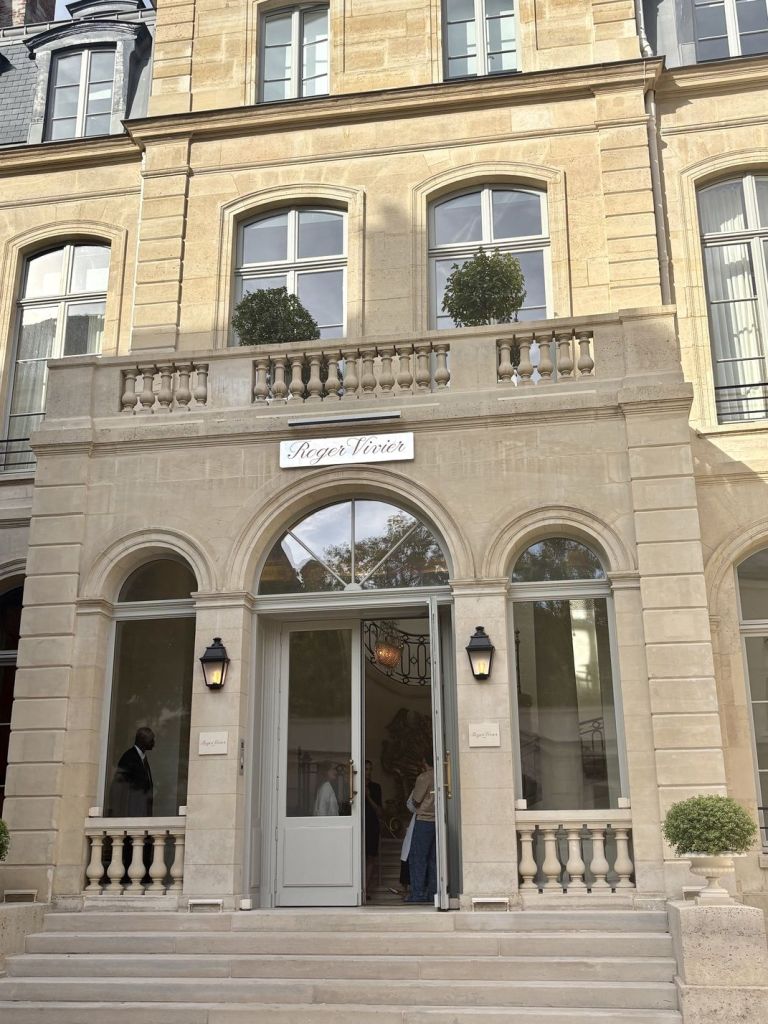
Roger Vivier never really designed ordinary shoes.
He approached footwear as sculpture — something that could transform the way a woman walked, stood and was seen.
Born in Paris in 1907, Vivier studied sculpture at the École des Beaux-Arts before turning his attention to footwear. That training would become central to his work. He thought in terms of shape, proportion and movement, treating the shoe as an object with its own architecture.
In 1937, he established his own Parisian house. What followed was a career defined by experimentation.
Vivier worked with unusual shapes, extravagant materials and increasingly architectural heels. His designs became associated with some of the most influential women of the twentieth century, while his collaborations with major couture houses — most famously Dior — established his reputation far beyond the world of traditional shoemaking.
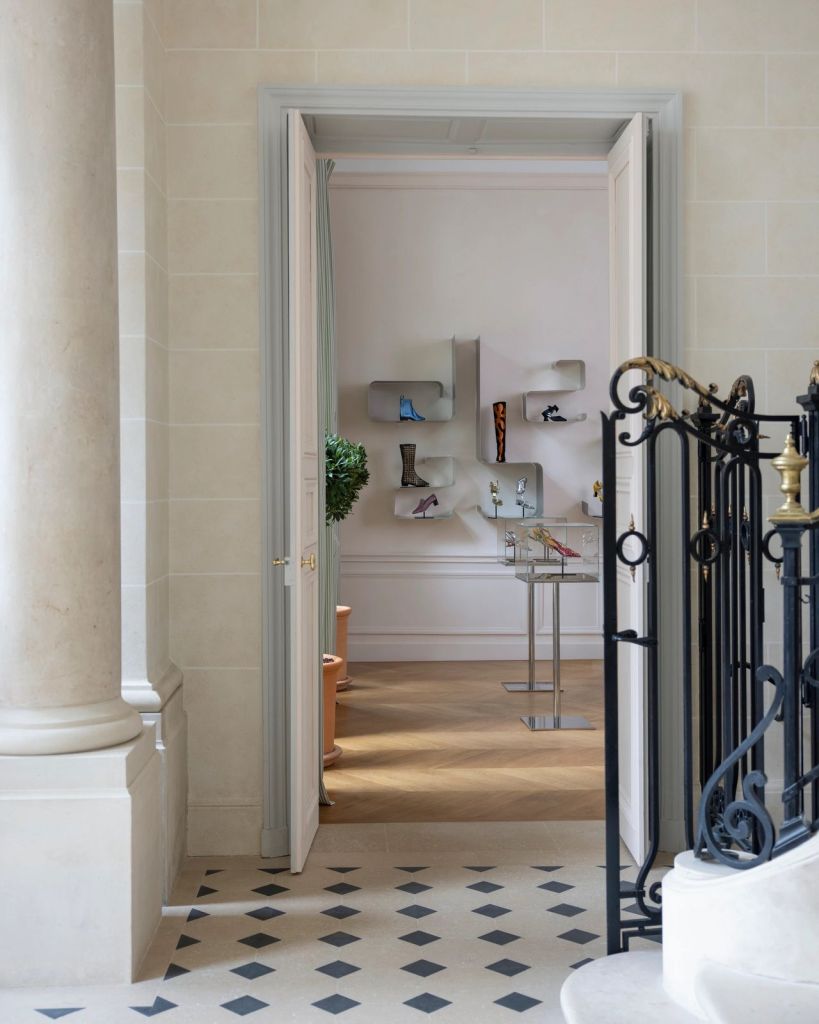
Photo courtesy of Maison Roger Vivier
But Vivier’s real legacy lies in his refusal to treat the shoe as merely functional.
The heel could become a sculpture.
The buckle could become jewellery.
The silhouette could become an instantly recognisable signature.
That spirit is still visible at Maison Vivier, the house’s Parisian residence at 98 rue de l’Université. Opened in a historic eighteenth-century hôtel particulier in Saint-Germain-des-Prés, the space brings together contemporary creation, heritage and the house archives.
During the 2026 European Heritage Days, visitors were given an unusual opportunity to see inside this world. The Salon de l’Héritage presented historic creations alongside photographs and design objects, while the archive revealed more than a thousand pieces documenting the history of the Maison.
Among them are creations associated with Princess Soraya and designs made famous through figures such as Catherine Deneuve. Few images are more closely associated with Roger Vivier than the Belle Vivier.
Created for Yves Saint Laurent’s 1965 Mondrian collection and later immortalised by Catherine Deneuve in Luis Buñuel’s Belle de Jour, the shoe demonstrated how a seemingly simple form could become part of cultural history. The famous buckle helped, of course. But the magic was in the proportion.
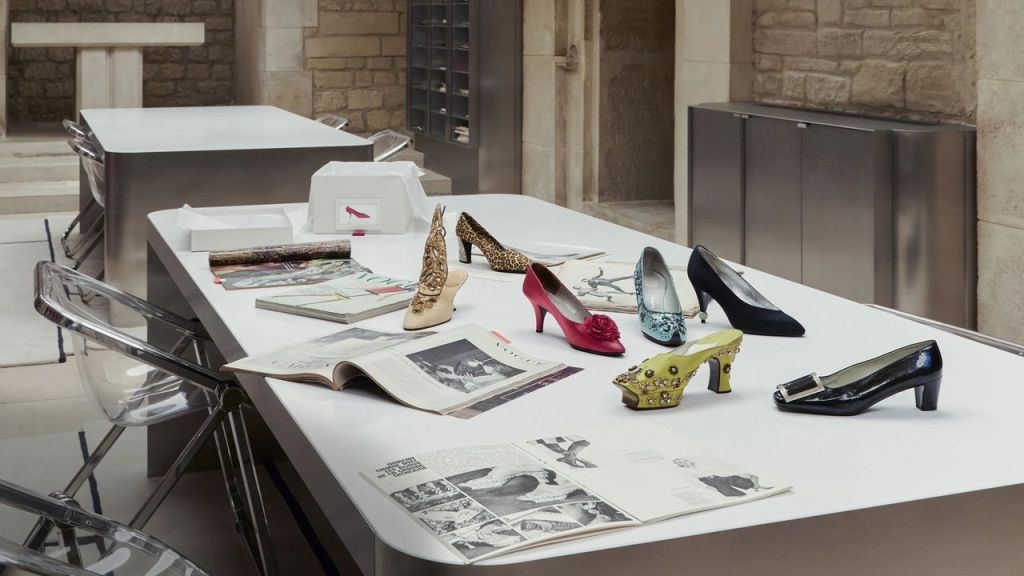
Photo courtesy of Maison Roger Vivier
That is what makes Vivier’s work continue to feel relevant. The designs are recognisable without being trapped in nostalgia.
Under creative director Gherardo Felloni, the house continues to reinterpret its vocabulary through new materials, embellishment and unexpected combinations. The archive becomes a starting point rather than an endpoint.
And that may be the most interesting thing about Roger Vivier today. Luxury houses often speak about heritage as though it were a precious object behind glass.
Vivier treats heritage differently. It is something to be played with. The past provides the vocabulary. The present changes the sentence. Walk through Maison Vivier and the history is impossible to miss. But neither is the sense that Roger Vivier’s imagination was never intended to remain in the past. A shoe, after all, is something designed to move. His legacy should do the same.